


Waterberg Biosphere Reserve: What It Means For Safari

Every Waterberg lodge website mentions it somewhere in the first paragraph: UNESCO Biosphere Reserve. It sits next to "malaria-free" and "Big Five" as one of the three facts every safari guide feels obliged to repeat. Few explain what it actually means, and fewer still connect it to anything a guest will notice on the ground. It is worth unpacking, because the idea behind a biosphere reserve is a genuinely useful way to understand why a stay in the Waterberg feels different to a stay in a fenced national park, and why a farm like ours exists at all.
What the Waterberg Biosphere Reserve Actually Is

A biosphere reserve is not a nature reserve with better marketing. It is a UNESCO designation under the Man and the Biosphere Programme, and its entire purpose is different from a national park's. Biosphere reserves differ from strictly protected areas such as national parks and wilderness areas by accepting human settlement as a feature of the landscape. They serve as living laboratories for testing and demonstrating innovative approaches to conservation and sustainable development, offering examples that can be replicated elsewhere.
The Waterberg's version of this was not a recent idea. It forms part of the Waterberg Biosphere Reserve, officially declared by UNESCO in 2001, which currently covers an area in excess of 654,033 hectares. That is a vast area, far larger than any single game reserve inside it, and that scale is the point: a biosphere reserve is a region, not a fence line.
Three Zones, One Idea

The mechanism UNESCO uses to balance conservation with the people who actually live and work on the land is zoning, and it is simpler than it sounds. A biosphere reserve has a spatial component in the form of three defined zones: core areas that are strictly protected and focused on conserving landscapes, ecosystems and species, and buffer zones surrounding them where limited human activities such as research, education and sustainable resource use are permitted. Beyond that sit transition zones, the outer areas where sustainable economic and social development is encouraged, with local communities, businesses and conservation organisations working together.
In practical terms for the Waterberg, that structure already describes the landscape you drive through on the way to a lodge. Rural villages fall within the transition zone and the western district of the province, and other farms and towns, such as Vaalwater, also fall within the transition zone. The large fenced wildlife reserves sit further in, at the heart of the biosphere: Marakele National Park is one of its core areas, and Welgevonden adjoins it, the kind of wild land the whole system is built to protect.
The Biodiversity Behind the Designation

A biosphere designation is not handed out for scenery alone. It requires genuine ecological significance, and the Waterberg has it in depth. More than 129 mammal species, 350 bird species and 2,000 plant species have been recorded within the Waterberg Biosphere, and the reserve's geology helps explain why. The Waterberg has unique rock formations, a result of the steep terrain, sandstone base rock and high rainfall in some areas. Four main drainage rivers, the Lephalala, Mokolo, Matlabas and Mogalakwena, together with numerous lesser rivers and streams, form a major water catchment for the Limpopo basin, which is the actual reason the region is called the Waterberg.
The conservation stakes are real too. Red Data List species found in the reserve include the white-backed night-heron, the Cape vulture, the aardvark, the brown hyaena and the critically endangered black rhinoceros. Welgevonden is a rhino sanctuary with both black and white rhino, which is one of the reasons the biosphere's conservation goals and a stay here are so closely linked.
Every game drive you take is, in a small way, a contribution to exactly the kind of species protection the UNESCO designation exists to secure.
Where Welgevonden and Laluka Fit In

Welgevonden sits at the heart of this network, strictly managed, fenced land where wildlife populations are actively protected and monitored. It is worth saying plainly: Laluka does not claim a formal position in the UNESCO zoning map, because that level of precision belongs to the biosphere authority, not to a lodge blog. What we can say honestly is that the broader philosophy of the transition zone, land used productively but sustainably, in service of the same landscape the reserve protects, describes exactly what our farm does.
A Working Example: Laluka Farm

The biosphere concept is, at its core, a bet that people and nature can share a landscape without one destroying the other. Laluka's own organic farm is a small, working version of that bet. It runs on minimal tillage and regenerative agriculture, with no synthetic chemicals and minimal plastic packaging. The homestead cows graze freely without supplements or hormones and give the milk that becomes our own artisanal cheese, the chickens and quails are raised in open poultry areas, the sheep and goats range free, and the beehives do double duty, producing honey while supporting pollination for neighbouring farms.
Grey water returns through a French drain system, boreholes supply drinking and irrigation water, and food waste goes to the pigs or into compost rather than landfill. None of this exists because a biosphere board requires it. It exists because it is a better way to farm, and it happens to be precisely the kind of sustainable land use a transition zone is designed to encourage.
What this means for a guest is straightforward: the meat, vegetables, cheese, honey and preserves on your plate at Laluka are not a sustainability slogan, they are the actual product of a working regenerative farm about half an hour by jeep from your suite, just outside the reserve.
Why This Matters for a Family Choosing a Malaria-Free Safari
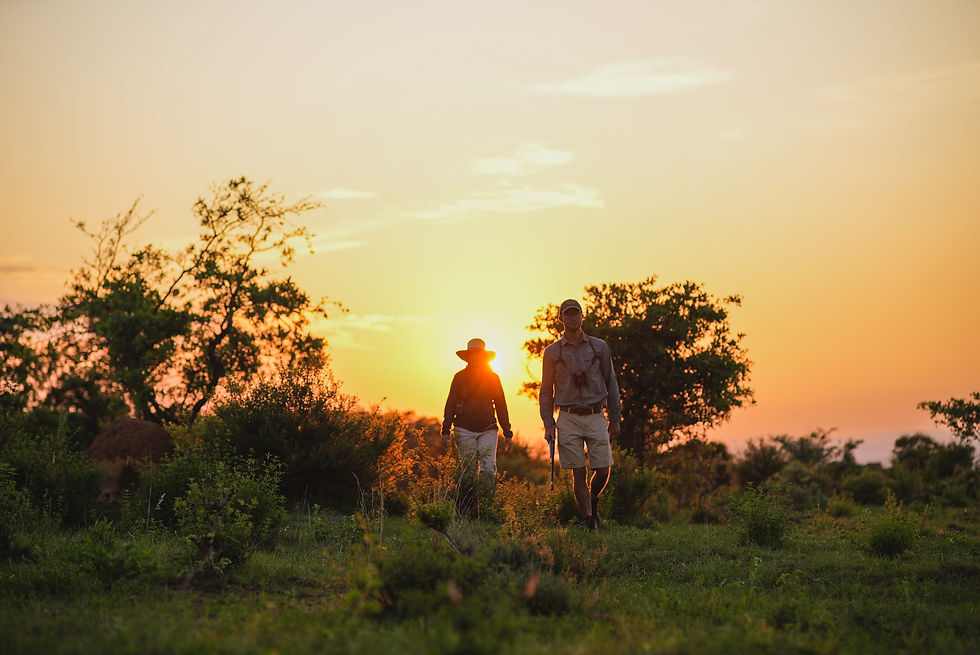
None of this changes the practical reasons families choose the Waterberg over Kruger's malaria belt or a longer journey to Madikwe. It does change what you are actually looking at when you land at Laluka. The Big Five game drives into Welgevonden are drives into the protected heart of a much larger, UNESCO-recognised system. The farm-to-table dinner on your first night is a transition-zone success story on a plate. The quiet, unhurried pace of six suites and one all-inclusive rate is not incidental to any of this, it is simply easier to run a farm and a small lodge well than a large one.
We sincerely thank every guest who visits Welgevonden, because that visit, directly or indirectly, helps fund the conservation work that protects both the white rhino and the black rhino on this reserve, along with the aardvark, the brown hyaena and the Cape vulture that share the same threatened landscape. Thank you for choosing to stay somewhere that depends on your visit to keep working. A biosphere reserve only works if the people living inside it have a reason to protect it. A night at Laluka, and a plate of food grown on our own ground, is a small but genuine part of that reason.
Frequently asked questions
What is the Waterberg Biosphere Reserve?
It is an area in Limpopo province designated by UNESCO under the Man and the Biosphere Programme, officially declared in 2001 and now covering more than 654,000 hectares. Its purpose is to balance conservation of biodiversity with the sustainable use of the land by the people who live and work there, rather than simply fencing nature off from human activity.
Is Welgevonden part of the Waterberg Biosphere Reserve?
Yes. Welgevonden Game Reserve sits within the Waterberg Biosphere Reserve and forms part of the protected reserve network that supports the biosphere's conservation goals, including its programme to protect both black and white rhino populations.
What is the difference between a national park and a biosphere reserve?
A national park is typically a single protected area with strict limits on human activity throughout. A biosphere reserve is a much larger region organised into three zones, a strictly protected core, a buffer zone with limited sustainable activity, and an outer transition zone where farms, towns and businesses operate under sustainability principles, so people and nature share the same landscape by design.
Does the biosphere designation affect my safari experience at Laluka?
Indirectly, yes. The game drives you take into Welgevonden move through protected wildlife land at the heart of the biosphere, and the food served at the lodge comes from Laluka's own organic farm, which operates on the same sustainable principles that define a biosphere's transition zone. The designation is the framework behind an experience you would otherwise simply enjoy without knowing why it works.
Is the Waterberg Biosphere Reserve malaria-free?
Yes. The altitude and climate of the Waterberg plateau, including Welgevonden, place it outside the malaria transmission zone, which is one of the reasons the region is popular with families and anyone preferring to avoid antimalarial medication.


Comments