


Welgevonden vs Kruger: Which South African Safari Is Right for You?

The short answer (for the traveller in a hurry)
If you want the biggest, most famous wilderness in South Africa and you don't mind anti-malarials, a longer journey and sharing the road, Kruger is iconic for good reason. If you want a malaria-free Big Five reserve just three hours from Johannesburg, quiet roads with no self-drive traffic, rhinos that still carry their horns, and one all-inclusive price with your meals and game drives built in, then the Waterberg — and Welgevonden, where we live — is very likely your safari.
Both are wonderful. They are simply built for different journeys. Here is the honest comparison, from our family to yours.
First, where are these two places?
Kruger National Park sits in the far north-east of South Africa, along the Mozambique border — close to two million hectares, one of the oldest and largest game reserves on the continent. Most visitors reach it by flying into a regional airport, or by driving five to six hours from Johannesburg.

Welgevonden Game Reserve lies in the Waterberg, in Limpopo, about 250 km — roughly three hours' drive — north of Johannesburg (or a 45-minute light-aircraft hop to the reserve's own airstrip). It's a private reserve of around 40,000 hectares, founded in 1993 and declared part of the UNESCO Waterberg Biosphere Reserve in 2001. Laluka Safari Lodge is one of only a handful of small lodges inside it.
Welgevonden vs Kruger at a glance
Feature | Welgevonden (Waterberg) | Kruger & Greater Kruger |
Malaria | Malaria-free — no tablets needed | Malaria-risk area, especially Oct–May |
Distance from Johannesburg | ~3 hours / 250 km by road, or a 45-min light-aircraft flight | ~5–6 hours by road, or fly in |
Big Five | Yes — including one of the largest white-rhino populations of any private reserve in Africa | Yes — famously high predator and leopard density |
Rhinos | Strongly protected and still have their horns | Often dehorned across the park as an anti-poaching measure |
Access & traffic | No self-drive, no day visitors, limited vehicles — quiet roads | Public Kruger allows self-drive and day visitors; private Greater Kruger reserves are exclusive and low-volume, like Welgevonden |
Reserve feel | Small, exclusive, low-volume | Vast, world-famous, higher volume |
Pricing | All-inclusive — one nightly rate covers game drives, meals and listed drinks | Public camps are often pay-per-activity; private Greater Kruger lodges are usually all-inclusive, like Welgevonden |
Is it malaria-free?
This is the single most common question we're asked, and it's often the deciding one — especially for families with young children, grandparents, or anyone who'd rather not take anti-malarial medication.
Welgevonden is malaria-free. You can bring a toddler or travel while pregnant without weighing up tablets and their side effects. Much of the Greater Kruger region, by contrast, is a malaria-risk area, particularly in the warm, wet months from October to May.

What about the wildlife — will I really see the Big Five?
Both reserves are genuine Big Five country: lion, leopard, elephant, buffalo and rhino. Kruger, particularly its private concessions, is celebrated for an exceptional density of predators and some of the best leopard viewing in Africa.
Welgevonden offers large elephant herds, frequent and remarkable rhino sightings, and cats including lion, leopard and cheetah. Because the reserve is quiet and remote, sightings here tend to feel earned — there's space and time between encounters, and it's the animals, not other vehicles, that you'll find in front of you.

Why do Welgevonden's rhinos still have their horns?
It's something guests notice and remember. Across much of Kruger and the Greater Kruger, rhinos are routinely dehorned to make them less of a target for poachers — an effective, heartbreaking necessity.
Welgevonden runs one of the most respected anti-poaching and rhino-conservation programmes of any private reserve, and as a result its rhinos still carry their full horns. To see a white rhino as nature shaped it, in the wild, is increasingly rare — and one of the quiet privileges of a stay here.
Which is better for families and first-time safari-goers?
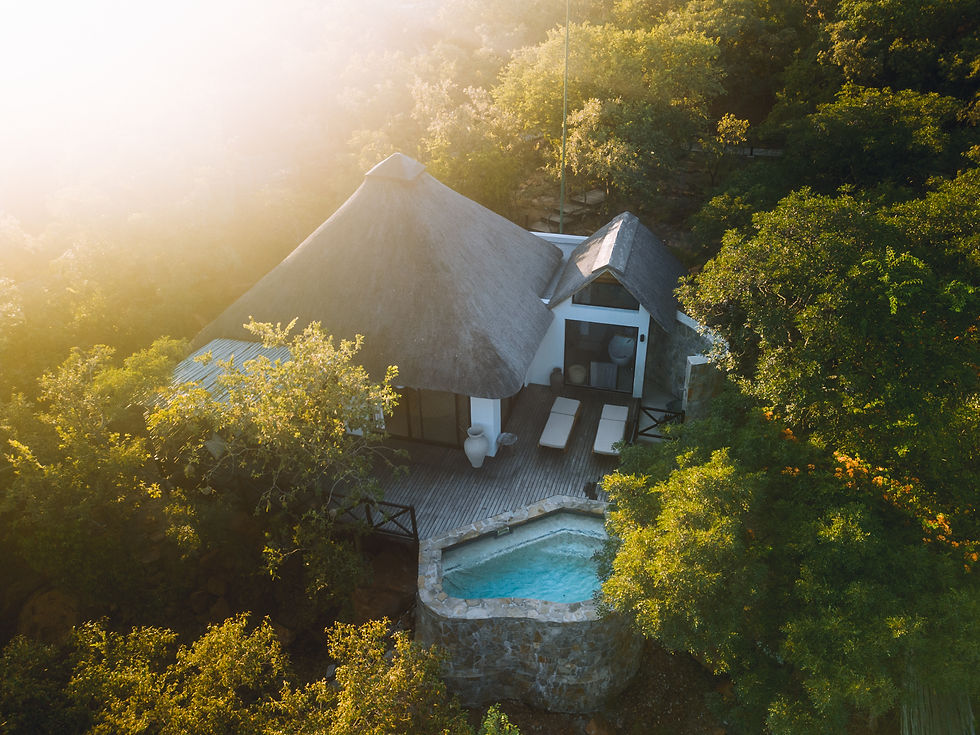
For a first safari, and especially for families, the Waterberg makes life simple: no malaria tablets, a short and scenic drive from Johannesburg, and no crowds. At Laluka Safari Lodge there are only six suites, so the whole experience is personal — your guide knows your name, your children's curiosity is welcomed on every drive, and the pace bends to you rather than a timetable.
Kruger's scale is magnificent, but it can be a lot for a first trip: longer travel, malaria precautions, and busier roads at popular sightings.
Let's talk value: what does "all-inclusive" really mean?
Many South African lodges quote a bed rate and then charge separately for game drives, certain meals and extras. At Laluka Safari Lodge we do it differently: one price per night includes your two daily game drives, all your meals, and listed drinks — much of it grown on our own organic farm and cooked in our open kitchen. There's no running tally, no surprises at checkout.
When you weigh it all up — a malaria-free Big Five reserve three hours from Johannesburg, full-horned rhinos, just six suites, and one honest all-inclusive price — a stay in the Waterberg offers rare value for what it is. It's exactly why so many of our guests stay longer, and come back.

So — Welgevonden or Kruger?
Choose Kruger if your heart is set on the single most famous name in African safari and the journey and malaria precautions don't faze you.
Choose Welgevonden if you want a malaria-free Big Five reserve, three hours from Johannesburg, with full-horned rhinos, quiet roads, an intimate family-run lodge, and one honest all-inclusive price. That's the safari we built at Laluka Safari Lodge, because it's the one we'd want to give the people we love.
Whichever you choose, you'll come home a little wiser — which is, after all, what Laluka means.
Frequently asked questions
Is Welgevonden malaria-free?
Yes. Welgevonden Game Reserve, in the Waterberg, is a malaria-free area, so no anti-malarial medication is required — making it well suited to families, young children and pregnant travellers.
How far is Welgevonden from Johannesburg?
About 250 km, or roughly a three-hour drive north. You can also charter a 45-minute light-aircraft flight to the reserve's airstrip.
Does Welgevonden have the Big Five?
Yes — lion, leopard, elephant, buffalo and rhino are all present, including one of the largest white-rhino populations of any private reserve in Africa.
Why do Welgevonden's rhinos still have their horns?
Thanks to a strong anti-poaching and conservation programme, Welgevonden's rhinos are not dehorned, so guests can see them with their full horns — increasingly rare elsewhere in South Africa.
Is Welgevonden better than Kruger?
Neither is "better" — they suit different journeys. Welgevonden is malaria-free, closer to Johannesburg, quieter and all-inclusive; Kruger is far larger and famous for high predator density. For a first safari, a family trip, or anyone avoiding malaria areas, Welgevonden is often the easier and more relaxing choice.
What's included in a stay at Laluka Safari Lodge?
At Laluka Safari Lodge, one nightly rate is all-inclusive: two daily game drives, all meals (much of it from our own organic farm), and listed drinks — with no per-activity charges.


Comments